
Direct-to-Garment (DTG) and Direct-to-Film (DTF) are two popular digital printing methods for custom apparel. Both can produce detailed, full-color designs, but they use different printing processes and are better suited to different applications.
If you are choosing a printing method for a clothing business, print shop, or custom apparel project, understanding the differences between DTG vs. DTF printing can help you make the right decision.
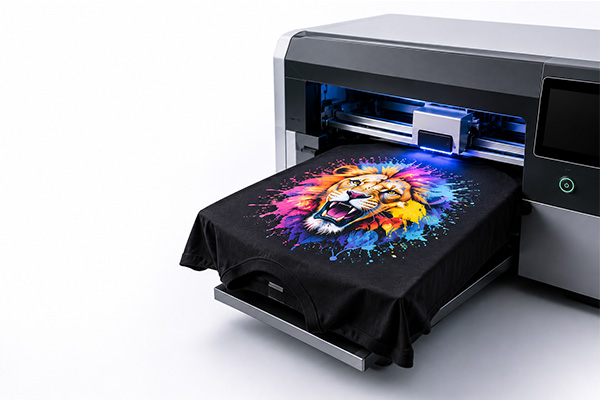
What Is DTG Printing?
DTG stands for Direct-to-Garment printing. As the name suggests, the printer applies water-based ink directly onto the fabric.
The typical DTG printing process includes:
- Pretreating the garment.
- Placing it on the printer platen.
- Printing the design directly onto the fabric.
- Heat curing the ink.
DTG is especially popular for printing detailed graphics and photographs on cotton T-shirts.
Advantages of DTG Printing
DTG offers several benefits:
- Excellent detail and color gradients
- Soft print feel
- Suitable for photographs and complex artwork
- No transfer film required
- Good for small custom orders
However, DTG generally performs best on garments with a high cotton content.
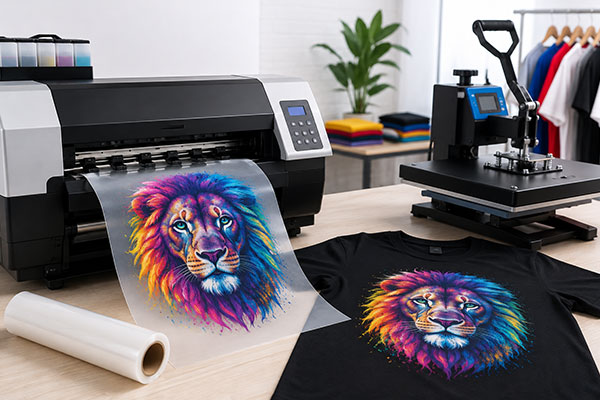
What Is DTF Printing?
DTF stands for Direct-to-Film printing. Instead of printing directly onto clothing, the design is first printed onto a special PET transfer film.
Adhesive powder is then applied to the printed image and cured. The finished transfer can be applied to the garment using a heat press.
The basic process includes:
- Printing the image onto DTF film.
- Applying hot-melt adhesive powder.
- Curing the powder.
- Heat pressing the transfer onto the garment.
- Removing the film.
DTF printing is widely used because it works with a much wider variety of fabrics.
DTG vs. DTF Printing: Key Differences
Although both methods use digital printing technology, their applications and production processes are quite different.
| Feature | DTG Printing | DTF Printing |
|---|---|---|
| Printing Method | Directly onto garment | Printed onto film first |
| Best Fabrics | Mainly cotton | Cotton, polyester, blends and more |
| Pretreatment | Usually required | Usually not required on garment |
| Print Feel | Softer | Slightly thicker |
| Durability | Good | Very good |
| Small Details | Excellent | Excellent |
| Production Flexibility | Moderate | High |
| Transfer Storage | Not possible | Transfers can be stored |
| Heat Press | Used for curing | Required for transferring |
Fabric Compatibility of DTG and DTF Printing
Fabric versatility is one of the biggest differences between DTG and DTF.
DTG works best on garments with a high cotton content. While some DTG systems can print on blends, results may vary depending on the fabric composition, garment color, and ink system.
DTF is the more versatile option when printing on:
- Polyester sportswear
- Cotton T-shirts
- Cotton-poly blends
- Hoodies
- Tote bags
- Canvas items
- Workwear
- Mixed-material orders
If your business regularly prints on different garment types, DTF can simplify production by reducing the need to maintain separate decoration methods.
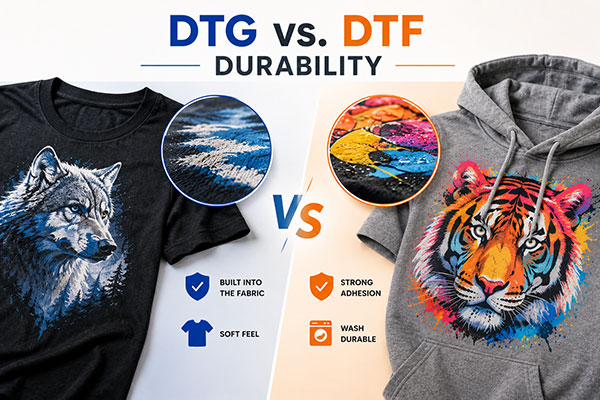
DTG vs. DTF Durability
Both printing methods can produce durable garments when properly produced and washed.
DTG durability depends heavily on:
- Ink quality
- Pretreatment
- Printing conditions
- Curing temperature
- Fabric quality
DTF durability also depends on:
- Transfer film quality
- DTF ink
- Adhesive powder
- Heat press temperature
- Pressure
- Curing time
A properly applied DTF transfer can maintain good color and adhesion after repeated washing. DTG prints can also remain durable, especially on suitable cotton garments.
DTG vs. DTF Print Quality
Both DTG and DTF can produce high-resolution images, fine text, gradients, and detailed artwork.
DTG tends to produce a very natural printed appearance because the ink penetrates into the fibers of the garment. This is particularly noticeable when printing on cotton.
DTF prints generally appear more vibrant and have strong color coverage because the design sits closer to the surface of the fabric.
For photographs and highly detailed artwork, both technologies can deliver excellent results when the printer, ink, software, and curing process are properly controlled.
DTG vs. DTF Print Feel
DTG usually provides the softer finish. Since the ink is printed directly into the fibers of the garment, the printed area can feel relatively light, especially on white or light-colored cotton shirts.
DTF transfers create an additional printed layer on the garment. As a result, the design can feel slightly thicker or more noticeable.
The difference becomes more obvious with large solid graphics.
DTG vs. DTF for Dark Garments
Both systems can print on dark-colored clothing by using white ink.
DTG normally requires pretreatment before printing white ink onto dark garments.
DTF prints white ink directly onto the transfer film as part of the printing process. The finished transfer is then pressed onto the garment.
For shops frequently printing black or colored clothing, DTF can provide a relatively straightforward workflow.
DTG vs. DTF Cost
The cost depends on equipment size, production volume, ink consumption, maintenance requirements, and consumables.
DTG equipment can represent a significant investment, especially for professional high-production systems. Pretreatment equipment may also be required.
DTF printing requires several consumables, including:
- PET film
- DTF ink
- Hot-melt powder
- Cleaning solution
A powder shaker and curing unit may also be used for larger production volumes.
For startups and small print businesses, compact DTF systems are often attractive because one machine can support many different garment materials.
However, businesses should calculate the complete production cost rather than comparing printer prices alone.
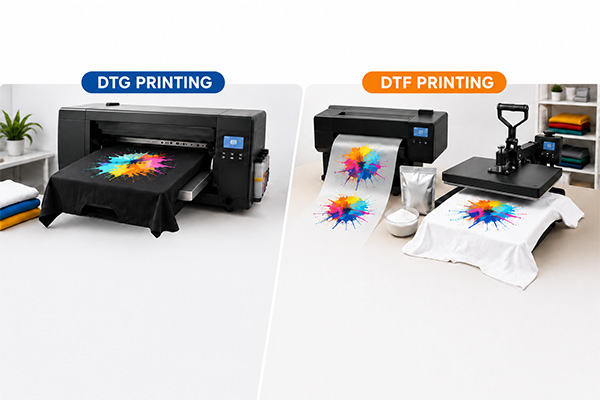
DTG vs. DTF: Which Is Better for Small Businesses?
For many small custom apparel businesses, DTF offers greater production flexibility.
A single DTF system can print transfers for multiple materials, garment colors, and product types. Businesses can also prepare transfers before receiving final garment orders.
DTG can be an excellent option for businesses primarily printing premium cotton T-shirts and prioritizing a soft print feel.
The better choice therefore depends on the products you plan to sell.
DTG vs. DTF Printing: Which Should You Choose?
There is no single winner in the DTG vs. DTF printing comparison.
DTG offers excellent image quality and a soft finish, particularly on cotton garments. It remains a strong option for premium T-shirt printing and highly detailed custom designs.
DTF provides greater fabric compatibility and production flexibility. It can handle cotton, polyester, blends, and many other materials while allowing transfers to be produced and stored in advance.
For businesses printing many different types of apparel, DTF is often the more versatile solution. For businesses focused mainly on high-quality cotton shirts, DTG may still be the better choice.
Conclusion
When comparing DTG vs. DTF printing, DTG stands out for its soft feel and excellent results on cotton, while DTF offers greater versatility across different fabrics and production applications.
If your business mainly produces premium cotton apparel, DTG may be the better fit. If you want to print T-shirts, hoodies, sportswear, workwear, and other products using one flexible system, DTF may offer more advantages.
Choosing the right printing technology ultimately comes down to your products, production workflow, print volume, and target customers.