
If you are starting a custom T-shirt business or expanding your printing services, choosing the best DTF printer for small business can make a big difference. A suitable printer should produce consistent colors, handle different order sizes, and keep daily operating costs under control.
However, the biggest or fastest machine is not always the best choice. For a small business, reliability, print quality, maintenance, and production capacity are usually more important.
In this guide, we will explain what type of DTF printer works best for small businesses and what you should check before buying one.
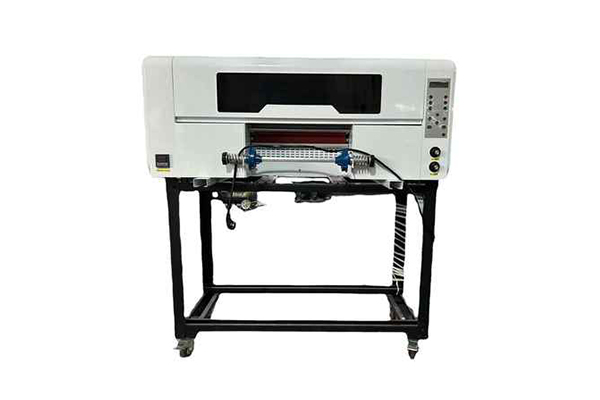
What is a DTF Printer?
A DTF printer is a printer designed for Direct to Film printing. Instead of printing directly onto a garment, the design is printed onto PET transfer film.
The basic process is:
- Print the design onto DTF film.
- Apply hot melt adhesive powder.
- Cure the powder.
- Place the transfer onto the garment.
- Use a heat press to transfer the design.
DTF printing can be used on cotton, polyester, blends, denim, canvas, and many other fabrics. This flexibility makes it especially attractive to small printing businesses that need to handle different customer orders.
What Is the Best DTF Printer for a Small Business?
For most small businesses, an A3 or 30 cm DTF printer is a good starting point.
It provides a practical balance between:
- Equipment cost
- Print size
- Production capacity
- Ink consumption
- Workspace requirements
- Maintenance
If your business already receives regular bulk orders, a 60 cm roll-to-roll DTF printer may be a better investment because it provides much higher production efficiency.
Here is a simple comparison:
| DTF Printer Type | Best For | Production Level |
|---|---|---|
| A4 DTF Printer | Beginners and hobby businesses | Low |
| A3 DTF Printer | Small custom printing businesses | Low to medium |
| 30 cm Roll DTF Printer | Growing small businesses | Medium |
| 60 cm DTF Printer | Commercial printing shops | Medium to high |
For most startups, an A3 or 30 cm machine is usually easier to manage.
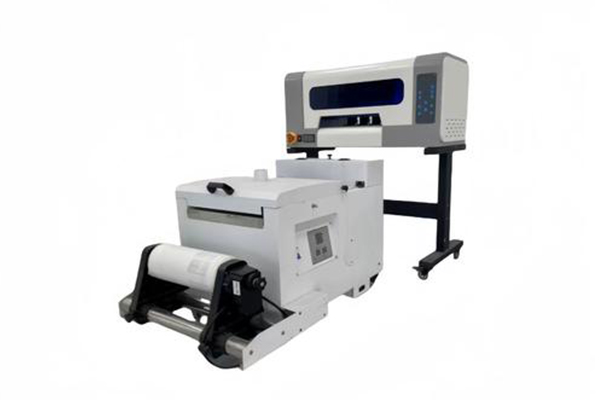
Why an A3 DTF Printer Is Good for Small Businesses
An A3 DTF printer is popular because it does not require a large production area or a very high initial investment.
It is suitable for printing:
- T-shirts
- Hoodies
- Sweatshirts
- Tote bags
- Sportswear
- Workwear
- Hats and fabric accessories
A3 printers are also convenient for businesses mainly producing individual designs, samples, personalized products, or small batches.
For example, if customers frequently order 5, 10, or 20 customized shirts at a time, an A3 machine can usually handle this type of workload efficiently.
When Should You Choose a 30 cm Roll DTF Printer?
A 30 cm roll-to-roll DTF printer is a step above a desktop A3 machine.
Instead of loading individual film sheets, the printer continuously feeds DTF film from a roll. This improves efficiency and reduces manual operation.
A 30 cm DTF printer is a good choice when:
- Orders are increasing.
- You print every day.
- You need longer gang sheets.
- A3 sheet printing is becoming too slow.
- You want to increase production without buying a large 60 cm machine.
For many growing small businesses, this size offers a good balance between cost and productivity.
When Is a 60 cm DTF Printer Better?
A 60 cm DTF printer is generally designed for larger production volumes.
It can print more transfers in less time and normally works with an automatic powder shaker and curing system.
Consider a 60 cm machine if your business:
- Receives regular bulk garment orders
- Supplies transfers to other print shops
- Produces hundreds of transfers per day
- Needs continuous roll printing
- Plans to expand production quickly
However, a 60 cm printer requires more space, more consumables, and usually a larger investment. If your current order volume is still small, buying such a large system may not be necessary.
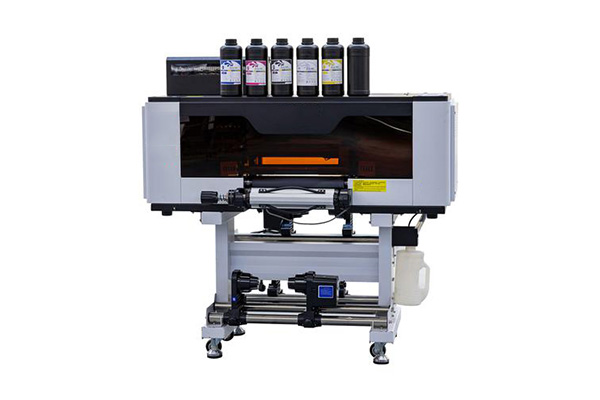
Key Features to Look for in a Small Business DTF Printer
1. Reliable Printhead
The printhead has a major influence on print quality and production speed.
A good DTF printer should provide:
- Sharp image details
- Smooth gradients
- Accurate colors
- Consistent ink output
More printheads can increase production speed, but they can also increase equipment cost and maintenance requirements.
For a small business, consistency is often more important than maximum printing speed.
2. White Ink Circulation System
White ink contains pigments that can settle inside the ink system.
A proper white ink circulation system continuously moves the ink and helps reduce sedimentation.
This is an important feature because clogged white ink lines or printheads can interrupt production and increase maintenance costs.
3. Automatic Cleaning System
DTF printers require regular printhead maintenance.
An automatic cleaning or moisturizing system can help prevent ink from drying inside the printhead when the printer is not operating.
This is especially useful for small businesses that may not run the printer continuously throughout the day.
4. Good RIP Software
RIP software controls how the printer handles colors, white ink, print resolution, and ink quantity.
Good DTF RIP software should allow you to control:
- ICC color profiles
- White ink layers
- Resolution
- Ink density
- Image layout
- Gang sheet printing
Reliable software can make daily production much easier.
5. Stable Film Feeding
If you choose a roll DTF printer, pay attention to the film feeding system.
Poor feeding can cause:
- Film misalignment
- Wrinkles
- Head strikes
- Uneven printing
- Wasted material
A stable feeding and take-up system becomes increasingly important when printing long jobs.
6. Easy Maintenance
Every DTF printer requires maintenance.
Before purchasing, check how easy it is to access and clean:
- Printheads
- Capping station
- Wiper
- Dampers
- Ink tubes
- Waste ink system
A machine designed for convenient maintenance can reduce production downtime.
Print Quality vs. Printing Speed
Many buyers focus heavily on speed when comparing DTF printers.
For a small business, this can be misleading.
Imagine one printer can produce significantly more film per hour but requires frequent cleaning and adjustment. Another printer is slightly slower but operates reliably throughout the day.
For most small businesses, the second printer may actually provide better overall productivity.
The best DTF printer should therefore balance:
print quality + speed + stability + maintenance cost.
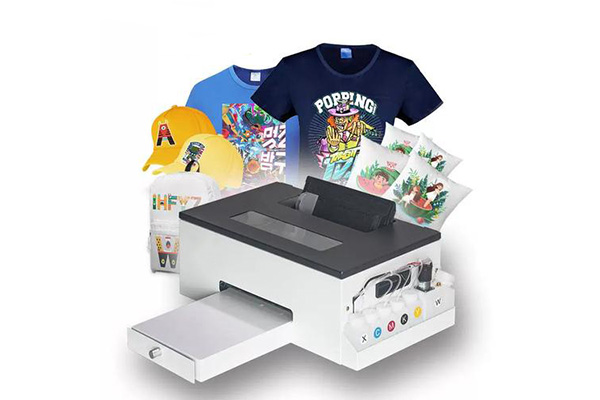
How Much Does a Small Business DTF Printer Cost?
DTF printer prices vary depending on printer size, printhead configuration, automation level, and included equipment.
Typical equipment categories include:
- Entry-level desktop DTF printers: approximately $1,000–$3,000
- A3 or 30 cm professional systems: approximately $2,000–$6,000
- 60 cm commercial DTF printer systems: approximately $5,000–$15,000+
The printer itself is only part of the investment.
You may also need:
- DTF ink
- PET film
- Hot melt powder
- Heat press
- Powder shaker
- Curing oven
- RIP software
- Cleaning solution
- Spare consumables
Therefore, you should calculate the complete printing setup rather than comparing printer prices alone.
Don’t Forget the Heat Press
A DTF printer cannot complete the entire process by itself.
You also need a reliable heat press machine to transfer the printed design onto garments.
For a small business, a 15 × 15 inch or 16 × 20 inch heat press is commonly suitable for T-shirts and hoodies.
Look for a machine that provides stable:
- Temperature
- Pressure
- Heating time
Uneven heat or pressure can reduce transfer quality even when the DTF print itself is excellent.
How Much Space Does a DTF Business Need?
One advantage of DTF printing is that you do not necessarily need a large workshop.
A small A3 setup may fit into a relatively compact workspace.
You need enough space for:
- DTF printer
- Computer
- Film storage
- Ink and powder
- Heat press
- Curing equipment
- Finished garment handling
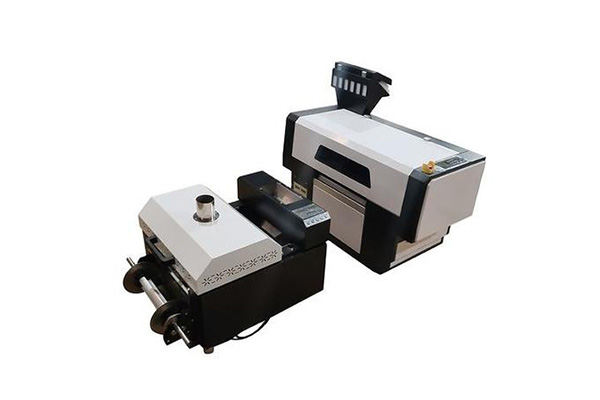
A roll-to-roll machine with an automatic powder shaker will require considerably more room.
You should also consider ventilation, especially around curing equipment and heat presses.
What Products Can You Sell With a DTF Printer?
A good DTF printer allows a small business to serve several markets instead of relying only on standard T-shirts.
You can produce customized:
- Company uniforms
- Sports jerseys
- Event shirts
- School clothing
- Promotional garments
- Personalized hoodies
- Tote bags
- Workwear
- Fashion apparel
You can also sell ready-to-press DTF transfers to customers who already own heat presses.
This can create another revenue stream without requiring you to supply the garments yourself.
Is DTF Printing Profitable for a Small Business?
It can be profitable when equipment and production costs are managed properly.
Your actual profit depends on factors such as:
- Ink cost
- Film cost
- Powder cost
- Garment cost
- Labor
- Electricity
- Equipment maintenance
- Shipping
- Selling price
Custom garments generally have higher margins than standard blank clothing because customers are paying for personalization.
Gang printing can also improve profitability by arranging multiple small designs on the same section of film and reducing waste.
Common Mistakes When Buying a DTF Printer
One common mistake is buying purely based on the lowest price.
An inexpensive printer can become costly if replacement parts, technical support, or compatible ink are difficult to obtain.
Another mistake is buying a machine that is much larger than your actual production requirements.
Before choosing your printer, consider your expected number of daily orders rather than only your future ambitions.
You should also confirm that the supplier can provide:
- Installation guidance
- RIP software support
- Operating instructions
- Maintenance guidance
- Spare parts
- Consumables
- Technical support
These services become very important once you start running the printer every day.
A3 vs. 60 cm DTF Printer: Which Should You Choose?
Choose an A3 or 30 cm DTF printer if you are:
- Starting a new printing business
- Producing personalized products
- Handling small or medium orders
- Working with limited space
- Trying to control your initial investment
Choose a 60 cm DTF printer if you are:
- Running an established printing shop
- Handling regular bulk orders
- Selling DTF transfers wholesale
- Printing continuously every day
- Planning higher-volume production
There is no single machine that is best for every company. The right printer is the one that matches your actual production requirements.
FAQ About DTF Printers for Small Businesses
Yes. DTF printing can be a practical option for beginners because it works with many types of fabric and does not require garment pretreatment in the same way as some direct-to-garment printing processes.
For most small businesses, an A3 or 30 cm DTF printer is a practical starting size. It provides enough capacity for custom orders without requiring the investment and workspace of a larger commercial system.
A compact DTF setup can be operated from a suitable home workspace, but you should provide adequate space, ventilation, electrical capacity, and safe storage for inks, powders, and equipment.
Regular operation is generally better for the ink system than leaving the printer unused for long periods. White ink especially requires proper circulation, cleaning, and maintenance.
Not necessarily. Small-volume businesses can manually apply and cure DTF powder. However, once order volumes increase, an automatic powder shaker and curing unit can significantly improve production efficiency.
Conclusion
Now you know what to look for when choosing the best DTF printer for small business. For most startups, an A3 or 30 cm DTF printer offers a practical combination of price, print size, and production capacity. If your order volume becomes much higher, moving to a 60 cm roll-to-roll system can improve productivity.
Before buying, don’t look at printing speed alone. Check the printhead, white ink circulation, RIP software, maintenance requirements, spare parts, and technical support. A stable printer that works consistently every day is usually more valuable to a small business than a faster machine that constantly needs adjustment.
If you are looking for a reliable DTF printer for your small business, Easify offers practical printing solutions to match different production needs. Contact us today to learn more about our DTF printers and get a quote.