
Direct-to-film printing has become increasingly popular among small businesses, custom apparel shops, and entrepreneurs because it can print colorful designs on a wide range of fabrics. However, the cost of DTF equipment can vary significantly.
If you are just entering the business, you may be searching for the cheapest DTF printer that can still provide acceptable print quality and reliable performance.
The lowest-priced printer is not always the best value. Before buying, it is important to understand what affects DTF printer prices, what equipment you actually need, and how to avoid spending more on repairs and maintenance later.
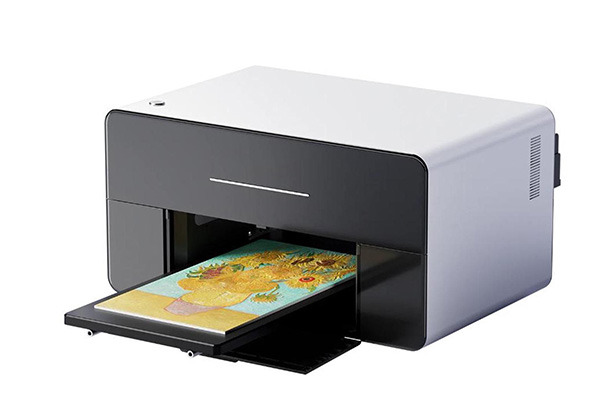
How Much Does a Cheap DTF Printer Cost?
Entry-level DTF printers are generally much more affordable than industrial production systems.
A typical price range may look like this:
| DTF Printer Type | Typical Price Range |
|---|---|
| Converted desktop DTF printer | $300–$800 |
| Entry-level A4 DTF printer | $800–$1,500 |
| A3 DTF printer | $1,200–$3,000 |
| 30 cm roll-fed DTF printer | $2,000–$5,000 |
| 60 cm commercial DTF printer | $4,000–$10,000+ |
Prices vary depending on the printhead, printing width, ink system, powder shaker, curing equipment, software, and manufacturer.
For beginners, an A4 or A3 DTF printer is usually one of the cheapest practical ways to start DTF printing.
What is the Cheapest Type of DTF Printer?
The cheapest option is often a converted desktop inkjet printer.
Some Epson-based printers, for example, can be modified to use DTF ink and PET film. This approach reduces the initial equipment cost and can be suitable for testing the DTF printing business.
However, converted printers also have disadvantages.
They usually require more manual maintenance, may not have automatic white ink circulation, and can experience printhead clogging more frequently.
For regular commercial use, a purpose-built A4 or A3 DTF printer is generally more convenient.
A4 DTF Printer
An A4 DTF printer is one of the most affordable dedicated DTF printing solutions.
It is suitable for:
- Beginners
- Home-based businesses
- Small T-shirt printing shops
- Custom gift businesses
- Low-volume printing
A4 DTF printers have a small footprint and relatively low investment cost.
The main limitation is printing size. Large graphics may need to be divided into multiple sections.
A3 DTF Printer
An A3 DTF printer costs slightly more but provides greater flexibility.
Compared with A4 models, A3 printers can produce larger transfer designs and usually offer higher production efficiency.
They are suitable for printing:
- T-shirts
- Hoodies
- Tote bags
- Sportswear
- Workwear
- Promotional clothing
For many small businesses, an A3 printer offers a good balance between purchase price, printing size, and productivity.
30 cm Roll-Fed DTF Printer
Businesses expecting higher production volumes may consider a 30 cm roll-fed printer.
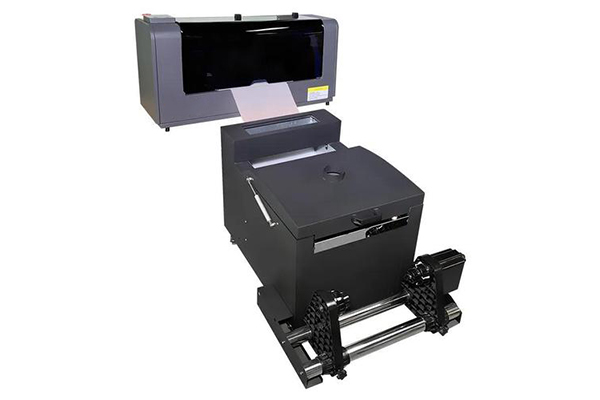
Unlike sheet-fed A3 machines, roll-fed printers can continuously print designs on DTF film. They can also be paired with an automatic powder shaker and curing machine.
Although the initial price is higher, automation can reduce manual work and improve production efficiency. For a growing custom apparel business, this can sometimes provide better long-term value than purchasing the cheapest desktop printer.
What Determines DTF Printer Price?
Several factors influence how much a DTF printer costs.
Printhead
The printhead is one of the most important components of a DTF printer.
Common printheads include models from Epson such as XP600, i1600, and i3200 series.
Different printheads affect:
- Printing speed
- Resolution
- Ink output
- Equipment cost
- Maintenance cost
Printers equipped with higher-performance printheads generally cost more.
Printing Width
Small A4 and A3 machines are typically cheaper than 30 cm or 60 cm commercial printers.
Larger printing widths allow businesses to print bigger graphics or multiple designs at the same time.
White Ink Circulation
White DTF ink contains pigments that can settle inside the ink system.
A dedicated white ink circulation or stirring system helps keep the ink moving and reduces sedimentation.
Very cheap printers may lack these systems, which can increase maintenance requirements.
Automatic Cleaning
Some DTF printers include automatic printhead cleaning or moisturizing systems.
These features may increase the machine price but can make daily operation easier.
Powder Shaker and Dryer
Entry-level machines often require users to apply hot-melt powder manually.
Commercial DTF systems can include an automatic powder shaker, powder recycling system, and curing dryer.
Automation significantly increases productivity but also increases the initial equipment investment.
Cheapest DTF Printer vs. Professional DTF Printer
Choosing between a low-cost printer and a professional machine depends mainly on your expected production volume.
| Feature | Cheap DTF Printer | Professional DTF Printer |
|---|---|---|
| Initial investment | Low | Higher |
| Printing speed | Low to medium | Medium to high |
| Production capacity | Small batches | Commercial production |
| Automation | Limited | Higher |
| Maintenance | More manual | More automated |
| Suitable users | Beginners | Established businesses |
If you only print several shirts per day, purchasing an expensive industrial printer may not be necessary.
However, if your business needs to produce dozens or hundreds of transfers daily, productivity becomes more important than simply finding the cheapest machine.
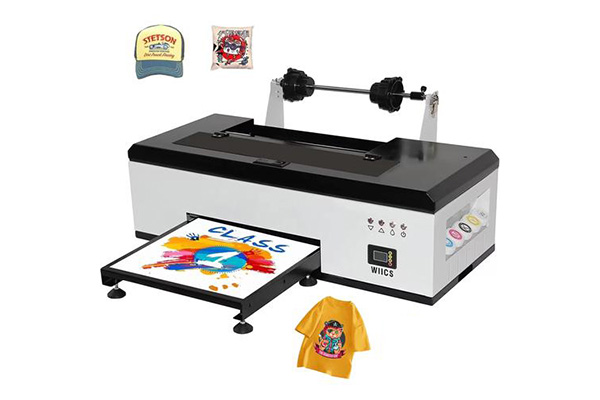
Hidden Costs of Cheap DTF Printers
The printer itself is only part of the total DTF printing investment.
You should also consider several additional expenses.
DTF Ink
DTF printing normally requires CMYK inks plus white ink.
White ink consumption can be significant because a white backing layer is usually printed beneath colored designs.
PET Film
DTF designs are printed onto specially coated PET transfer film.
Film quality can affect ink absorption, powder adhesion, and transfer performance.
Hot Melt Powder
DTF powder is applied to wet ink before curing.
Different powder formulations may be used depending on the fabric and desired transfer characteristics.
Heat Press
A heat press is required to transfer the finished design onto clothing.
Small desktop heat presses are relatively affordable, while larger pneumatic or automatic models cost more.
RIP Software
DTF printers usually require RIP software to manage white ink layers, color output, and print settings.
Always check whether the software license is included with the printer.
Replacement Parts
Printheads, dampers, capping stations, pumps, and other components may eventually require replacement.
Before choosing a very cheap printer, check whether replacement parts are easy to obtain.
How to Choose the Cheapest DTF Printer Without Sacrificing Quality
Price should be one consideration rather than the only deciding factor.
When comparing affordable DTF printers, consider the following factors.
Choose the Right Printing Size
Do not purchase a larger printer than your business requires.
For small custom orders, A4 or A3 machines may be sufficient.
For continuous commercial production, a 30 cm or 60 cm roll printer may offer better efficiency.
Check the Printhead
Ask which printhead the machine uses and whether replacements are readily available.
Printhead cost is an important part of long-term maintenance.
Look for White Ink Circulation
A white ink circulation system is highly recommended for DTF printing.
It can help reduce pigment settling and lower the risk of white ink problems.
Ask About Technical Support
A cheap machine can become expensive if technical problems cannot be solved quickly.
Before purchasing, check whether the supplier provides:
- Installation guidance
- Operation manuals
- Video tutorials
- Remote technical support
- Spare parts
- Printing profiles
Calculate Total Cost
Instead of comparing only the printer price, calculate the entire setup cost.
For example:
Printer + heat press + curing equipment + RIP software + ink + film + powder + shipping
This gives you a more realistic idea of your actual investment.
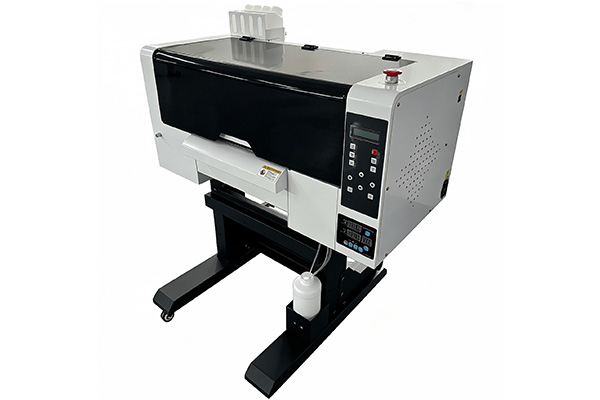
Is the Cheapest DTF Printer Worth Buying?
A cheap DTF printer can be worth buying when your production requirements are relatively small.
For beginners, an affordable A4 or A3 printer provides an opportunity to learn the DTF printing process without making a large initial investment.
However, extremely low-priced machines can sometimes require more maintenance or lack important functions.
If you plan to build a long-term printing business, it is usually better to choose an affordable machine with reliable components rather than simply selecting the lowest possible price.
How to Reduce Your DTF Printing Startup Cost
There are several ways to keep your initial investment under control.
Start with the printing width you actually need instead of immediately purchasing a large commercial system. Manual powder application and curing equipment can also reduce startup costs when production volume is small.
Buying a complete DTF printer package can sometimes be more economical because the printer, RIP software, inks, film, powder, and accessories are supplied together.
It is also important to keep some budget available for consumables and replacement parts rather than spending the entire budget on the printer itself.
FAQ
Yes. A4 DTF printers are compact, relatively inexpensive, and suitable for learning the printing process or handling small custom orders.
Not necessarily. Small-volume users can apply DTF powder manually. Automatic powder shakers become more useful when production volume increases.
A3 DTF printers provide a larger printing area and higher productivity. They usually cost more than A4 models but are often better suited to small commercial printing businesses.
Conclusion
Finding the cheapest DTF printer does not simply mean choosing the machine with the lowest price tag. A good budget printer should provide acceptable print quality, manageable maintenance, available consumables, and enough production capacity for your business.
For beginners and small printing shops, A4 and A3 DTF printers are usually the most affordable starting options. As order volumes increase, upgrading to a 30 cm or 60 cm roll-fed system can provide greater automation and productivity.