
Starting a DTF printing business does not mean you need to buy a large commercial printer from the beginning. For new users, a compact, easy-to-maintain, and affordable machine is often a better choice.
So, what is the best DTF printer for beginners?
A beginner-friendly DTF printer should provide reliable print quality, simple operation, manageable maintenance, and enough production capacity for small orders. In most cases, an A3 or 30 cm DTF printer is a practical starting point.
This guide explains what beginners should look for when choosing their first DTF printer.
What Type of DTF Printer Is Best for Beginners?
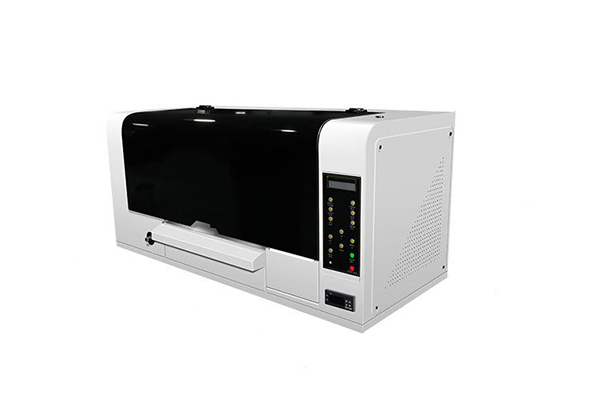
For most beginners, small-format DTF printers are easier to operate and require a lower initial investment.
The most common options include:
- A4 DTF printers
- A3 DTF printers
- 30 cm roll-fed DTF printers
- 60 cm commercial DTF printers
Among these options, A3 and 30 cm DTF printers are generally the most suitable for beginners.
They provide enough printing width for common T-shirt designs while remaining relatively compact and affordable.
A4 DTF Printer: Best for Learning and Very Small Orders
An A4 DTF printer is one of the smallest options available.
It can be suitable for beginners who want to learn DTF printing at home or produce small logos and personalized products.
Advantages
- Low initial investment
- Compact size
- Easy to place in a small workspace
- Suitable for testing and learning
- Lower ink and film consumption
Limitations
The main limitation is print size. A4 DTF printers may be too small for large front or back designs on adult T-shirts.
They are therefore better suited to:
- Small logos
- Children’s clothing
- Sleeve prints
- Personalized gifts
- Small test orders
If you plan to start a serious custom apparel business, you may quickly outgrow an A4 DTF printer.
A3 DTF Printer: A Good Choice for Most Beginners
An A3 DTF printer provides a better balance between cost, print size, and production capacity.
The larger printing area allows beginners to produce many common garment designs without investing in a full commercial system.
An A3 DTF printer can be used for:
- T-shirts
- Hoodies
- Tote bags
- Uniforms
- Workwear logos
- Customized apparel
For someone starting a small printing business, an A3 DTF printer is often more practical than an A4 model.
It is still compact enough for a small workshop but offers greater flexibility for customer orders.
30 cm Roll-Fed DTF Printer: Best for a Growing Small Business
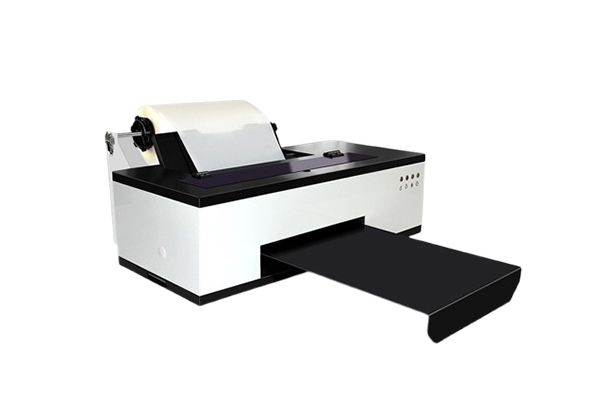
A 30 cm DTF printer is another strong option for beginners, especially if you expect order volume to increase.
Unlike sheet-fed printers, roll-fed systems can continuously print designs on DTF film.
This makes them suitable for producing multiple transfers more efficiently.
A 30 cm DTF printer offers several advantages:
- Continuous roll printing
- Higher productivity than basic desktop machines
- Suitable width for common garment graphics
- Better for batch orders
- Easier to scale as your business grows
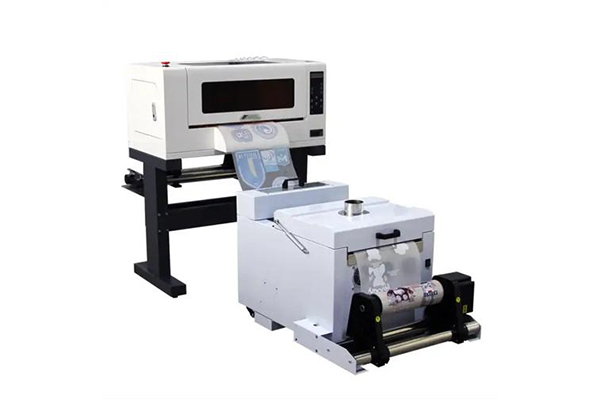
Some 30 cm systems can also be connected to an automatic powder shaker and dryer, creating a more efficient production line.
For beginners who already expect regular customer orders, a 30 cm DTF printer may offer better long-term value than a small desktop model.
Is a 60 cm DTF Printer Suitable for Beginners?
A 60 cm DTF printer provides much higher production capacity, but it is not always the best choice for someone completely new to DTF printing.
Larger machines usually require:
- More workspace
- Higher initial investment
- More ink
- Larger film rolls
- Automatic powder shaking equipment
- More maintenance experience
A 60 cm DTF printer is better suited to established print shops or businesses with consistent production demand.
For most first-time users, starting with an A3 or 30 cm DTF printer can reduce financial risk while providing enough capacity to learn the printing process.
Key Features to Look for in a Beginner DTF Printer
Printer size is only one factor. Beginners should also pay attention to machine configuration and ease of maintenance.
1. White Ink Circulation System
White ink is one of the biggest maintenance challenges in DTF printing because its pigments can settle over time.
A beginner-friendly printer should include a white ink circulation or agitation system.
This helps keep white ink moving and reduces sedimentation in the ink system.
It can also help reduce the risk of nozzle blockage.
2. Reliable Printhead
The printhead directly affects print quality, speed, and operating cost.
Common DTF printers may use Epson-based printheads such as XP600, i1600, or i3200 series configurations.
Beginners do not necessarily need the fastest printhead.
Reliability, replacement cost, and availability of technical support may be more important than maximum printing speed.
3. Easy Maintenance
DTF printers require regular maintenance.
Look for a printer that makes routine tasks relatively simple, including:
- Nozzle checks
- Printhead cleaning
- Wiper cleaning
- Capping station maintenance
- White ink circulation
- Waste ink management
A complicated maintenance system can make learning DTF printing much more difficult.
4. Compatible RIP Software
DTF printing requires RIP software to control important settings such as white ink layers and ink output.
For beginners, the software should have a relatively simple interface and come with suitable printer profiles.
It is also useful if the supplier provides installation and setup guidance.
5. Stable Film Feeding
Film feeding should remain accurate during printing.
Unstable feeding can cause alignment problems, image distortion, or wasted film.
For roll-fed DTF printers, a reliable feeding and take-up system becomes particularly important.
6. Technical Support
Technical support should be one of the main considerations when buying your first DTF printer.
Beginners may need help with:
- Printer installation
- RIP software setup
- ICC profiles
- Print parameters
- White ink adjustment
- Nozzle problems
- Film and powder settings
Choosing a supplier that provides training, operating videos, spare parts, and troubleshooting assistance can make your first DTF printer much easier to use.
How Much Should a Beginner Spend on a DTF Printer?
There is no single ideal budget because DTF printer prices vary considerably depending on machine size, printhead configuration, automation, and accessories.
However, beginners should avoid considering printer price alone.
A complete DTF setup may also require:
- DTF ink
- PET transfer film
- Hot-melt powder
- RIP software
- Heat press
- Curing equipment
- Cleaning solution
- Spare consumables
For higher-volume production, you may also need a powder shaker and dryer.
A cheaper printer with poor technical support or unstable performance may ultimately cost more because of wasted ink, film, downtime, and replacement parts.
A3 vs 30 cm DTF Printer for Beginners
For many new users, the main decision is between an A3 printer and a 30 cm roll-fed machine.
| Feature | A3 DTF Printer | 30 cm DTF Printer |
|---|---|---|
| Initial investment | Lower | Moderate |
| Workspace required | Small | Small to medium |
| Printing method | Sheet or compact feeding | Roll-fed |
| Production capacity | Low to medium | Medium |
| Best for | Learning and small orders | Small businesses |
| Batch production | Limited | Better |
| Expansion potential | Moderate | Better |
If you are testing the DTF business or expect only occasional orders, an A3 printer may be sufficient.
If you already have customers or expect regular production, a 30 cm roll-fed printer may provide more room for growth.
Final Thoughts
Choosing a DTF printer for beginners should not simply be about finding the cheapest machine. Ease of operation, white ink management, maintenance, print size, technical support, and future production needs are equally important.
Starting with a smaller and reliable machine allows you to learn the DTF workflow without taking on unnecessary equipment costs. Once your orders increase, you can move to a larger or more automated printing system.
If you are looking for a beginner-friendly solution, Easify offers A3, 30 cm, and other DTF printer options for different production requirements. We can also provide DTF inks, films, powders, heat presses, and technical guidance to help you build a complete printing setup.