
In the fast-evolving world of printing technology, two terms often create confusion among beginners and business owners: DTF printers and UV DTF printers. At first glance, they might sound the same, but they are two completely different printing methods designed for unique applications. If you are considering investing in one, understanding their differences is crucial.
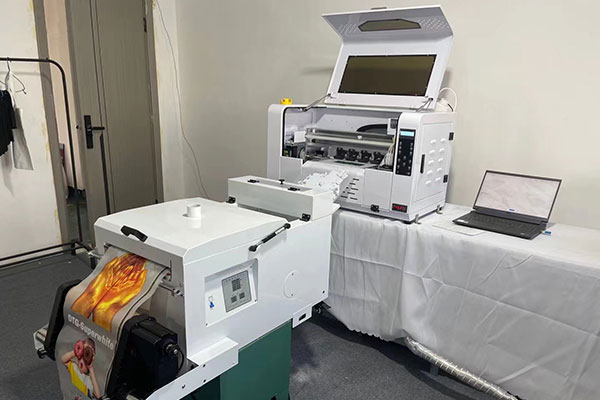
What is a DTF Printer?
DTF (Direct-to-Film) printing is a technology that transfers designs onto a special PET film using textile inks. The printed film is then coated with hot-melt adhesive powder, cured, and finally heat-pressed onto fabric.
- Primary Use: Apparel printing (t-shirts, hoodies, caps, tote bags).
- Inks Used: Water-based pigment inks.
- Process: Print → Powder → Cure → Heat press.
- Key Benefit: Works on a wide variety of fabrics (cotton, polyester, blends) without needing pre-treatment.
DTF printers are especially popular in the garment decoration industry for their durability, stretchability, and vibrant colors.
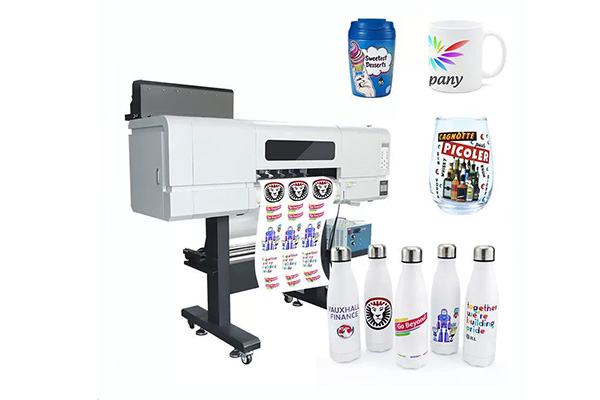
What is a UV DTF Printer?
UV DTF (Direct-to-Film with UV technology) works with UV-curable inks instead of textile inks. Designs are printed onto a PET film with layers of white, color, and varnish, and cured instantly with UV light. The printed design can then be transferred onto different surfaces using an adhesive film.
- Primary Use: Hard surface decoration (glass, wood, metal, plastic, ceramics).
- Inks Used: UV-curable inks.
- Process: Print with UV curing → Apply transfer film → Stick to surface.
- Key Benefit: Allows printing on irregular, rigid, or non-porous items where traditional printing methods struggle.
UV DTF printers are widely used for custom phone cases, bottles, signage, promotional items, and home décor.
Are DTF and UV DTF Printers the Same?
No — they are not the same. While both use the “DTF” name, they differ in technology, ink type, applications, and substrates:
| Feature | DTF Printer | UV DTF Printer |
|---|---|---|
| Ink Type | Water-based pigment inks | UV-curable inks |
| Main Substrates | Fabrics (cotton, polyester, blends) | Hard surfaces (glass, metal, plastic, wood, ceramics) |
| Transfer Method | Heat press | Adhesive transfer film |
| Durability | Washable, flexible | Scratch-resistant, rigid |
| Best For | Apparel printing | Custom merchandise and décor |
In short, DTF is for textiles, while UV DTF is for hard objects.
How to Choose Between DTF and UV DTF
Your choice depends on the type of business you run:
- Choose DTF printing if your focus is apparel, uniforms, or custom fashion products.
- Choose UV DTF printing if you want to customize rigid items like mugs, phone cases, or signage.
- Invest in both if you plan to expand into multiple markets and want maximum flexibility.
Final Thoughts
While DTF and UV DTF printers share similar names, they are not the same technology. Each has its own strengths, limitations, and ideal use cases. Understanding these differences will help you make a smarter investment and grow your printing business effectively.
Whether you want to enter the booming custom apparel industry or tap into the growing personalized merchandise market, choosing the right printer is the first step toward success.